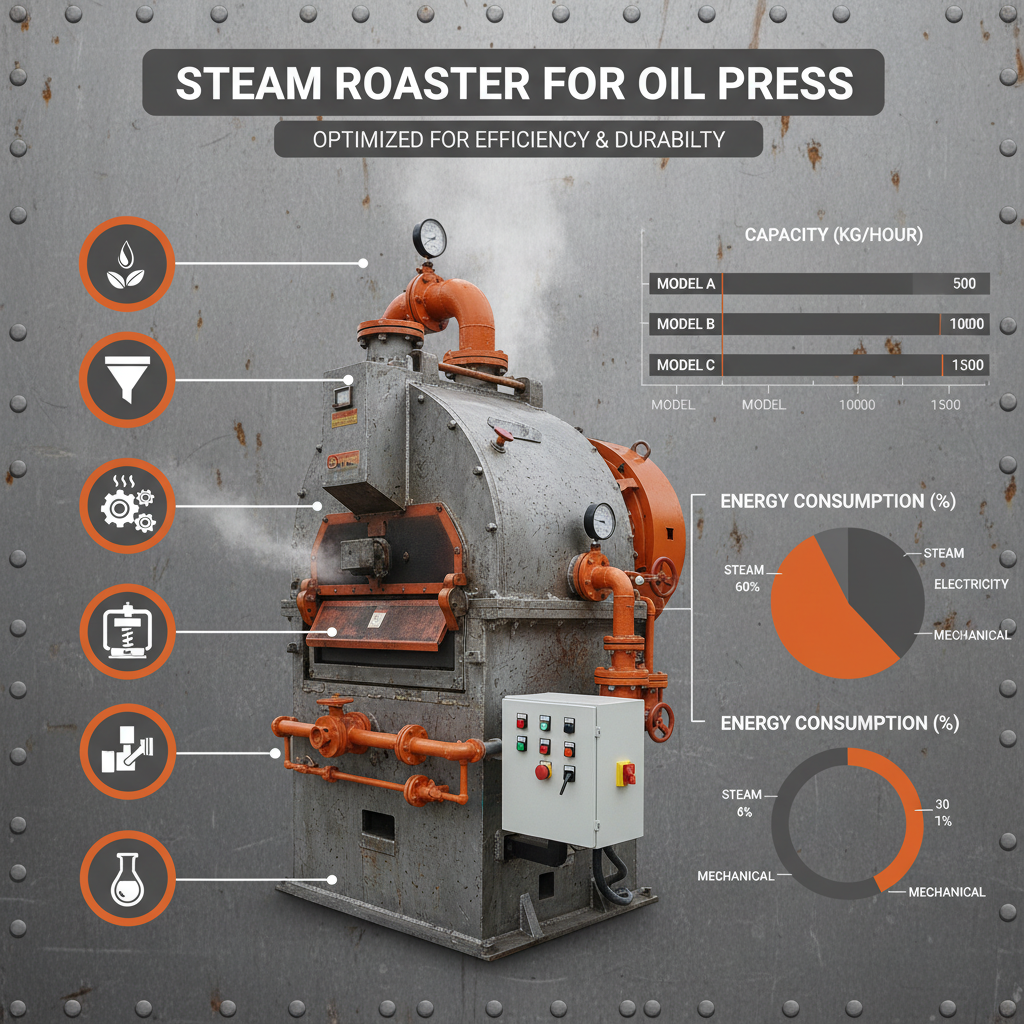
In the competitive landscape of vegetable oil production, the pretreatment phase is often where the final quality and yield of the oil are decided. A steam roaster for oil press serves as a critical bridge between raw seed reception and the mechanical pressing process, ensuring that the seeds are conditioned to release their oils most efficiently. By applying precise thermal and moisture control, this equipment optimizes the cell structure of oilseeds, reducing the energy required for extraction and enhancing the overall throughput of the mill.
Globally, the demand for high-quality edible oils is rising, pushing manufacturers to move away from crude roasting methods toward automated steam-based systems. The integration of a professional steam roaster for oil press allows for a more uniform heat distribution, which prevents the scorching of seeds and preserves the nutritional integrity of the resulting oil. For operators of medium to large capacity oil presses, this is not merely an equipment upgrade but a strategic move toward maximizing ROI and ensuring product consistency across batches.
Understanding the mechanics of steam roasting is essential for any facility aiming to lower its residual oil content in the press cake. Whether dealing with soybeans, rapeseed, or sunflower seeds, the use of a steam roaster for oil press addresses the fundamental challenge of seed hardness and moisture imbalance. By transforming dry industry parameters into a streamlined thermal process, oil mills can achieve higher extraction rates while maintaining the delicate flavor profiles required by modern food safety standards.
Global Industry Context of Steam Roasting
On a global scale, the vegetable oil industry is under immense pressure to increase efficiency while reducing waste. According to industry trends aligned with ISO standards for food processing, the precision of seed conditioning can vary the final oil yield by as much as 2-5%. This is why the steam roaster for oil press has become a staple in industrial zones from Southeast Asia to South America, where high-capacity processing is the norm.
The primary challenge facing many mills is the inconsistency of raw material moisture levels. Without a standardized roasting process, mechanical expellers often face excessive wear and tear or produce cakes with unacceptably high oil residues. By implementing a controlled steam roasting phase, plants can stabilize their production lines, ensuring that the oilseeds enter the pressing stage with the optimal plasticity and temperature to facilitate oil flow.
Defining the Steam Roaster for Oil Press
In simple technical terms, a steam roaster for oil press is a specialized thermal conditioning vessel designed to heat oilseeds using saturated steam. Unlike dry roasting, which can lead to uneven heating and localized burning, steam roasting utilizes the high latent heat of water vapor to penetrate the seed core quickly. This process breaks down the cellular structure of the seed and reduces the viscosity of the oil, making it far easier for the oilseed pretreatment equipment to prepare the material for the expeller.
Beyond the physics of heat transfer, this equipment serves a vital role in modern humanitarian and economic needs by allowing smaller regional mills to produce professional-grade refined oil. By lowering the barrier to high-yield extraction, these roasters empower local cooperatives to maximize the value of their harvests, reducing the reliance on expensive imported oils and enhancing local food security.
Ultimately, the steam roaster is the "heart" of the pretreatment stage. It doesn't just heat the seeds; it chemically and physically modifies them. By adjusting the steam pressure and residence time, operators can tailor the roasting process to the specific characteristics of the seed—whether it be the high-protein profile of soybeans or the dense structure of rapeseed—ensuring a seamless transition to the medium big capacity oil press.
Core Components and Technical Factors
The durability of a steam roaster for oil press depends heavily on its material construction. High-grade carbon steel or stainless steel alloys are typically used to withstand the corrosive nature of steam and the abrasive action of moving seeds. Precision-engineered agitators ensure that every seed is exposed to the steam uniformly, preventing "cold spots" that could lead to inconsistent oil extraction in the subsequent pressing stages.
Scalability is another core factor. Modern systems are designed to integrate seamlessly with various plant sizes, from small capacity oil expellers to full-scale vegetable oil processing plant solutions. This scalability is achieved through modular steam injection ports and variable speed drives on the rotating drums, allowing the operator to match the roasting speed with the intake capacity of the press.
Cost efficiency is realized through optimized heat recovery and precise moisture control. A well-calibrated steam roaster for oil press prevents the over-drying of seeds, which would otherwise lead to excessive energy consumption and potential seed damage. By maintaining a strict balance between temperature and humidity, the equipment ensures that the seeds are "pliable," which significantly reduces the mechanical load on the oil press screws.
Performance Metrics and Efficiency Analysis
Measuring the success of a steam roaster for oil press involves analyzing the relationship between steam input, residence time, and final oil yield. When the roasting parameters are optimized, there is a visible decrease in the torque required by the oil press, which translates directly into lower electricity costs and a longer lifespan for the pressing components.
Furthermore, the quality of the oil—measured by acidity and color—is directly influenced by the roasting temperature. Overheating can lead to the degradation of fatty acids, while under-heating results in poor oil release. Therefore, the ability to maintain a stable thermal profile is the primary metric for evaluating the efficiency of the roasting system.
Comparative Efficiency of Roasting Methods for Oil Press
Real-World Applications and Use Cases
In large-scale industrial zones, such as the soybean processing hubs in Brazil or the rapeseed mills in Canada, the steam roaster for oil press is integrated into a fully automated line. In these contexts, the roaster is linked to PLC systems that adjust steam flow based on real-time moisture sensors, ensuring that thousands of tons of seeds are processed per day with zero variance in quality.
Conversely, in remote industrial zones or developing agricultural regions, modular steam roasting units provide a lifeline for local farmers. For example, in small-scale peanut oil production in West Africa, switching from open-fire roasting to a controlled steam roaster has allowed producers to reduce aflatoxin risks and significantly increase the purity of their oil, opening doors to international export markets.
Long-Term Value and Sustainability Benefits
The long-term value of investing in a steam roaster for oil press extends beyond simple yield increases. From a sustainability perspective, steam roasting is far more energy-efficient than traditional electric or gas-fired drying. By utilizing waste heat from other parts of the plant to generate steam, mills can drastically reduce their carbon footprint while lowering operational overhead.
Furthermore, the reliability of steam-conditioned seeds leads to a reduction in mechanical failure. When seeds are properly roasted, the friction within the oil press is minimized, which means fewer replacements for expensive press screws and gears. This creates a cycle of trust and reliability for the operator, knowing that the production line can run 24/7 without unexpected downtime.
From a social and innovation angle, adopting these technologies represents a commitment to quality and safety. For the end consumer, the result is an oil that is clearer, more stable, and free from the burnt odors associated with poor roasting. This commitment to excellence builds brand equity and ensures that the oil mill remains competitive in an era of strict food quality regulations.
Future Innovations in Steam Roasting Technology
The future of the steam roaster for oil press lies in the intersection of digital transformation and green energy. We are seeing a shift toward "Smart Roasting," where AI algorithms predict the optimal roasting curve based on the specific batch of seeds' moisture and oil content. This eliminates the trial-and-error phase of manual adjustment and ensures peak efficiency from the first minute of operation.
Material science is also evolving, with the introduction of nano-coatings for the roasting drums that prevent seed adhesion and further reduce heat loss. Additionally, there is a growing trend toward integrating biomass boilers to produce the steam, allowing oil mills to use their own press cakes (residues) as fuel, creating a truly circular economy within the factory walls.
As global policies push for a reduction in industrial emissions, the transition to fully automated, closed-loop steam systems will become mandatory. The next generation of roasters will likely feature integrated moisture recovery systems, where the steam evaporated from the seeds is condensed and reused, further pushing the boundaries of resource efficiency in the oilseed industry.
Analysis of Steam Roasting Performance across Different Oilseeds
| Oilseed Type |
Optimal Temp (°C) |
Yield Increase (%) |
Pressing Ease (1-10) |
| Soybean |
110-130 |
3.5% |
9 |
| Rapeseed |
90-110 |
4.2% |
8 |
| Sunflower |
100-120 |
2.8% |
7 |
| Peanut |
120-140 |
5.0% |
10 |
| Cottonseed |
110-130 |
3.1% |
6 |
| Palm Kernel |
130-150 |
3.9% |
8 |
FAQS
Steam roasting provides uniform heat distribution and adds moisture to the seeds, which softens the cell walls more effectively than dry heat. This prevents seed scorching and significantly reduces the mechanical pressure required by the oil press, leading to higher oil yields and less equipment wear.
Precise temperature control is critical. If the temperature is too low, the oil remains viscous and difficult to extract. If it is too high, the oil can oxidize or develop a "burnt" taste. A professional steam roaster allows for exact temperature maintenance to preserve the oil's natural aroma and nutritional value.
Yes, steam roasters are versatile. However, each seed type (soybean, rapeseed, peanut, etc.) requires a different temperature and residence time. Most modern roasters feature adjustable settings to accommodate the specific physical and chemical properties of various oilseeds.
Maintenance primarily focuses on the steam valves, seals, and the rotating drum. Regular descaling of the steam pipes and lubrication of the agitator bearings are essential to prevent downtime and ensure the machine maintains a consistent thermal profile.
While there is an initial energy cost for steam production, it is usually offset by the increased oil yield and the reduced electricity consumption of the oil press. When combined with a waste-heat recovery system, the net energy cost often decreases.
The capacity of your roaster must match or slightly exceed the intake capacity of your oil press. If the roaster is too slow, it becomes a bottleneck; if it is too fast, seeds may sit too long and overcook. Consult with an expert to align your pretreatment equipment with your press capacity.
Conclusion
In summary, the steam roaster for oil press is an indispensable component of modern oilseed processing. By optimizing the thermal and moisture conditions of the raw material, it not only boosts oil extraction yields and improves product quality but also extends the lifespan of the entire production line. From the technical advantages of uniform heating to the economic benefits of reduced energy waste, the value of professional steam conditioning is undeniable.
As the industry moves toward smarter, greener, and more automated solutions, investing in high-quality pretreatment technology is the most reliable way to ensure long-term profitability. We encourage mill operators to audit their current conditioning process and consider the transition to automated steam systems to stay competitive in a global market. For more information on professional oil processing solutions, visit our website: www.oilmillchina.com