Look, I've spent the last fifteen years knee-deep in concrete dust and grease, watching projects come together – and sometimes fall apart. And one thing I can tell you straight away is this: keeping your oil clean is fundamental. We’re talking about extending the life of expensive machinery, preventing downtime, and ultimately, keeping jobs on schedule. That's where a good vertical oil filter comes in. It’s not flashy, but it’s the quiet workhorse that separates professional operations from ones constantly fighting breakdowns.
For years, we relied on the standard spin-on filters. They did the job, sure, but they were messy to change, prone to leaks, and frankly, just weren’t cutting it when running equipment in harsh conditions. We were seeing increased oil contamination, leading to more frequent maintenance and shortened component lifespans. It wasn’t just a cost issue; it was a logistical nightmare. Downtime means delays, and delays on a major project can be catastrophic.
The shift to vertical oil filter systems wasn’t a quick decision. It took testing, observing performance in real-world scenarios, and listening to the guys on the ground. But the results spoke for themselves. Cleaner oil, longer intervals between changes, and a significant reduction in unexpected failures. It's about keeping things running, plain and simple.
The Importance of Vertical Oil Filter Systems
Let's be clear: oil is the lifeblood of heavy equipment. Contaminated oil is like cholesterol in your arteries – it clogs things up, reduces efficiency, and eventually leads to failure. Vertical oil filter systems aren't about just removing particles; they’re about maintaining oil integrity, extending its usable life, and protecting critical components from wear and tear.
From hydraulic systems to engines, the consistent cleanliness achieved with these filters directly translates into fewer repairs, reduced downtime, and increased productivity. We’re talking about real money saved, and more importantly, projects delivered on time and within budget. It’s a proactive approach to maintenance, shifting the focus from reactive repairs to preventative care.
Understanding Vertical Oil Filter Technology
The key difference between a traditional spin-on filter and a vertical oil filter lies in the filtration process and housing design. Traditional filters rely on a pleated paper element contained within a metal can. These can get clogged quickly, creating backpressure, and aren't easily cleaned or inspected. Vertical filters, on the other hand, utilize a cartridge-style system, typically with a higher surface area and more robust filtration media.
This larger filtration area means longer service intervals and a more consistent flow rate, even when the filter is becoming loaded. Furthermore, the vertical design allows for gravity to assist in sediment settling, improving overall filtration efficiency. The housing is usually constructed from durable materials like steel or aluminum, built to withstand the rigors of harsh environments.
Crucially, the cartridge is easily accessible for inspection and replacement, often without needing to shut down the entire system. This is a huge advantage when you're dealing with critical equipment that can't afford extended downtime. It allows for quick maintenance, minimizing disruptions and maximizing uptime.
Core Components and Their Functionality
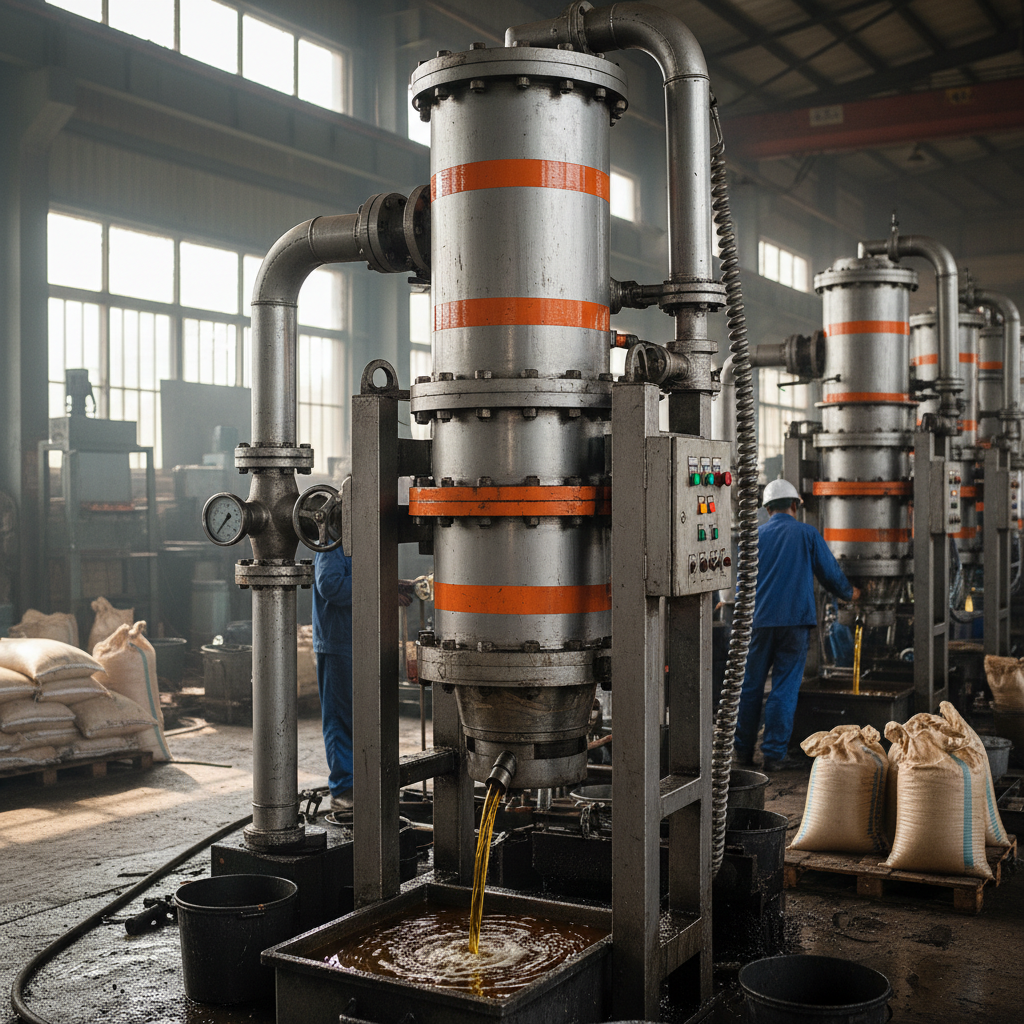
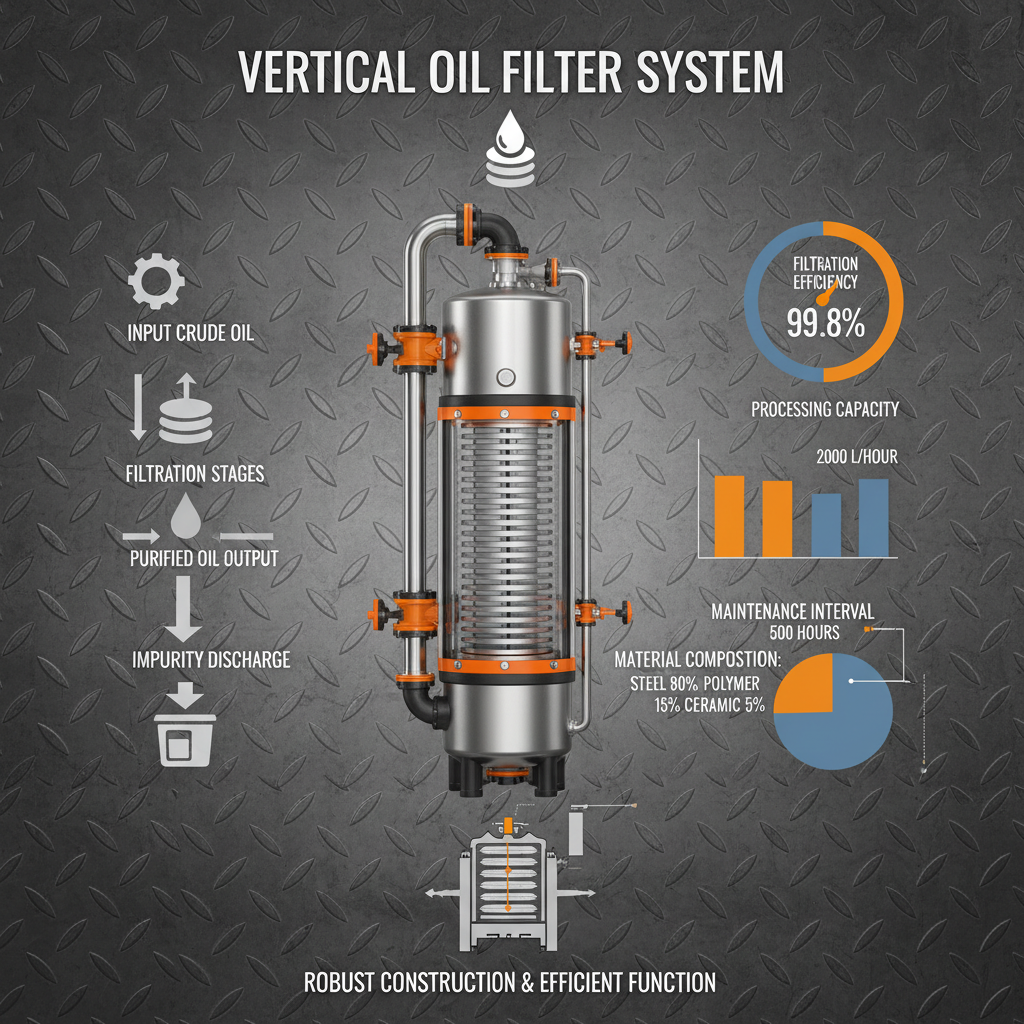
A vertical oil filter system is comprised of several key components. First, you have the housing itself, which provides structural integrity and contains the filtration media. Then there's the filter cartridge, available in various micron ratings depending on the application's needs. A differential pressure gauge is also crucial, indicating when the cartridge needs to be replaced.
Often, you’ll find bypass valves incorporated into the system. These protect the system in case the filter becomes completely blocked, ensuring some oil flow continues to critical components. Finally, there's the connection hardware – fittings, hoses, and adapters – which must be robust and leak-proof to maintain system integrity. Quality components are non-negotiable; you get what you pay for.
The interaction between these components dictates the system's overall effectiveness. A poorly designed housing or a low-quality cartridge can negate the benefits of the vertical design. It’s about the system working as a whole, not just individual parts. We always prioritize systems with easily accessible components and standardized replacement parts.
Performance Metrics of Vertical Oil Filters
When evaluating a vertical oil filter, there are several key performance indicators (KPIs) to consider. First, filtration efficiency – measured in microns – determines how effectively the filter removes particulate matter. Lower micron ratings indicate finer filtration, but can also lead to reduced flow rate.
Then there’s flow rate, crucial for maintaining system pressure and preventing cavitation. Pressure drop, measured in PSI, indicates the resistance the filter imposes on oil flow. Excessive pressure drop can strain the pump and reduce efficiency. Finally, dirt-holding capacity – the amount of contaminants the filter can hold before needing replacement – is a key indicator of service interval length.
Vertical Oil Filter Performance Comparison
Global Applications in Heavy Industry
You’ll find vertical oil filter systems in use across a huge range of industries. Mining operations, for instance, rely on them to keep massive excavators and haul trucks running reliably in extremely dusty and demanding environments. Construction sites, like the ones I spend my life on, benefit immensely from the reduced downtime.
In manufacturing, particularly in industries like steel production and automotive assembly, these filters protect sensitive hydraulic systems and ensure consistent product quality. Even in marine applications, protecting engines and hydraulic systems from saltwater contamination is critical. The versatility of these systems is a major selling point.
The Long-Term Value Proposition
Investing in vertical oil filter systems isn’t just about immediate cost savings on oil and filter replacements. It’s about the bigger picture: extending the lifespan of your equipment, reducing unplanned downtime, and improving overall operational efficiency. These filters contribute to a more sustainable approach to maintenance, minimizing waste and maximizing asset utilization.
That translates to increased profitability, improved project timelines, and a more reliable operation. Plus, there's the peace of mind that comes with knowing your equipment is protected. It’s a small investment that yields significant returns in the long run. It's about building trust in your equipment, and ultimately, in your operation.
From a safety perspective, fewer mechanical failures mean a safer working environment for your crews. A breakdown on a remote site can be dangerous, and preventative maintenance goes a long way towards mitigating those risks.
Future Trends and Optimization Strategies
We’re seeing a move towards more sophisticated monitoring systems integrated with vertical oil filter systems. These systems use sensors to continuously monitor filter performance, oil quality, and system pressure, providing real-time data and predictive maintenance alerts. This allows for proactive filter changes, preventing catastrophic failures.
There’s also ongoing research into advanced filtration media, including synthetic materials and nanofiber technologies, offering even higher efficiency and dirt-holding capacity. And with the increasing focus on sustainability, we're seeing a push for more eco-friendly filter materials and responsible disposal practices.
Automation is also playing a role, with automated filter replacement systems being developed for larger operations. These systems minimize human intervention, reduce maintenance costs, and improve overall efficiency. It’s a constantly evolving field, and staying ahead of the curve is crucial.
Table Summarizing Key Optimization Strategies for Vertical Oil Filter Systems
| Optimization Area |
Implementation Strategy |
Estimated Cost Impact |
Expected ROI |
| Real-time Monitoring |
Implement sensor-based system with data analytics. |
$5,000 - $15,000 per machine |
12-18 months |
| Advanced Filter Media |
Transition to synthetic or nanofiber filter cartridges. |
$200 - $500 per cartridge |
6-12 months |
| Preventative Maintenance Scheduling |
Develop data-driven maintenance schedule based on filter performance. |
$1,000 - $3,000 per year |
3-6 months |
| Automated Filter Replacement |
Integrate automated filter change system into existing machinery. |
$10,000 - $50,000 per system |
24-36 months |
| Oil Analysis Program |
Regularly analyze oil samples for contamination and wear particles. |
$500 - $1,500 per year |
6-12 months |
| Filter Housing Integrity Checks |
Regularly inspect filter housings for leaks and damage. |
$200 - $500 per year |
3-6 months |
FAQS
The biggest advantages are improved filtration efficiency, longer service intervals, reduced downtime, and easier maintenance. Spin-on filters can struggle with high flow rates and quickly become clogged, leading to frequent changes. Vertical filters, with their larger capacity and efficient design, offer a much more robust and reliable solution for keeping your oil clean and your equipment running smoothly. This leads to significant cost savings over the long term.
The frequency of filter changes depends heavily on the operating environment and the type of oil being filtered. A good rule of thumb is to monitor the differential pressure gauge – when the pressure drop reaches a certain threshold (typically specified by the manufacturer), it's time to replace the cartridge. Regular oil analysis can also provide valuable insights into filter performance and help you optimize your maintenance schedule.
Generally, yes, but it’s crucial to verify compatibility before making the switch. You need to consider factors like flow rate, system pressure, and oil viscosity. Selecting the correct micron rating for the filter cartridge is also essential. Consult with a filtration specialist to ensure the system is properly sized and configured for your specific application.
The initial investment in a vertical oil filter system is typically higher than that of a spin-on filter. However, the lower maintenance costs, extended service intervals, and reduced downtime associated with vertical filters often result in significant long-term savings. The total cost of ownership is usually lower with a vertical system, especially in demanding applications.
Installation can vary depending on the complexity of the existing system. Some systems are designed for easy retrofitting, while others may require modifications to the hydraulic lines. It's generally recommended to have a qualified technician perform the installation to ensure proper operation and prevent leaks.
Look for a supplier that offers a wide range of filter cartridges, provides technical support, and has a proven track record of reliability. Quality materials, robust construction, and readily available replacement parts are also important factors to consider. A supplier that understands your specific application and can recommend the right solution is invaluable.
Conclusion
We've covered a lot of ground, but the core message remains clear: vertical oil filter systems are a smart investment for any operation that relies on heavy machinery. They offer superior filtration, reduced downtime, and a lower total cost of ownership compared to traditional spin-on filters. It’s about moving beyond simply fixing problems to proactively preventing them.
The future of oil filtration lies in smarter, more integrated systems. Combining vertical filtration technology with real-time monitoring and predictive maintenance will unlock even greater efficiencies and reliability. If you’re serious about protecting your equipment and maximizing your productivity, it’s time to consider making the switch. For more information and to explore our range of solutions, visit our website: www.oilmillchina.com