Optimizing oil extraction rates depends heavily on the precision of the pretreatment phase, specifically how raw seeds are conditioned before pressing. When seeds are not uniformly processed, the resulting oil yield drops, and the energy consumption per ton of oil increases significantly.
The mechanical challenge lies in achieving a consistent "embryo" or flake thickness, which ensures that the cell structures of the oilseeds are ruptured uniformly. This is where specialized flaking technology transforms a standard vegetable oil production line from a basic operation into a high-efficiency industrial process.
By analyzing the technical evolution of rolling mills and the impact of hydraulic precision on seed conditioning, we can better understand how to maximize output in modern oilseed processing plants.


Flaking is not merely a reduction in size but a strategic restructuring of the seed. By rolling the seed into a thin, consistent flake (the embryo), the surface area is increased and the internal oil cells are exposed. This significantly reduces the resistance during the subsequent pressing or leaching stages.
Without precise flaking, the oilseeds may enter the expeller in uneven sizes, leading to "channeling" where the pressing force is distributed unevenly. This results in higher residual oil in the cake and wasted raw materials.
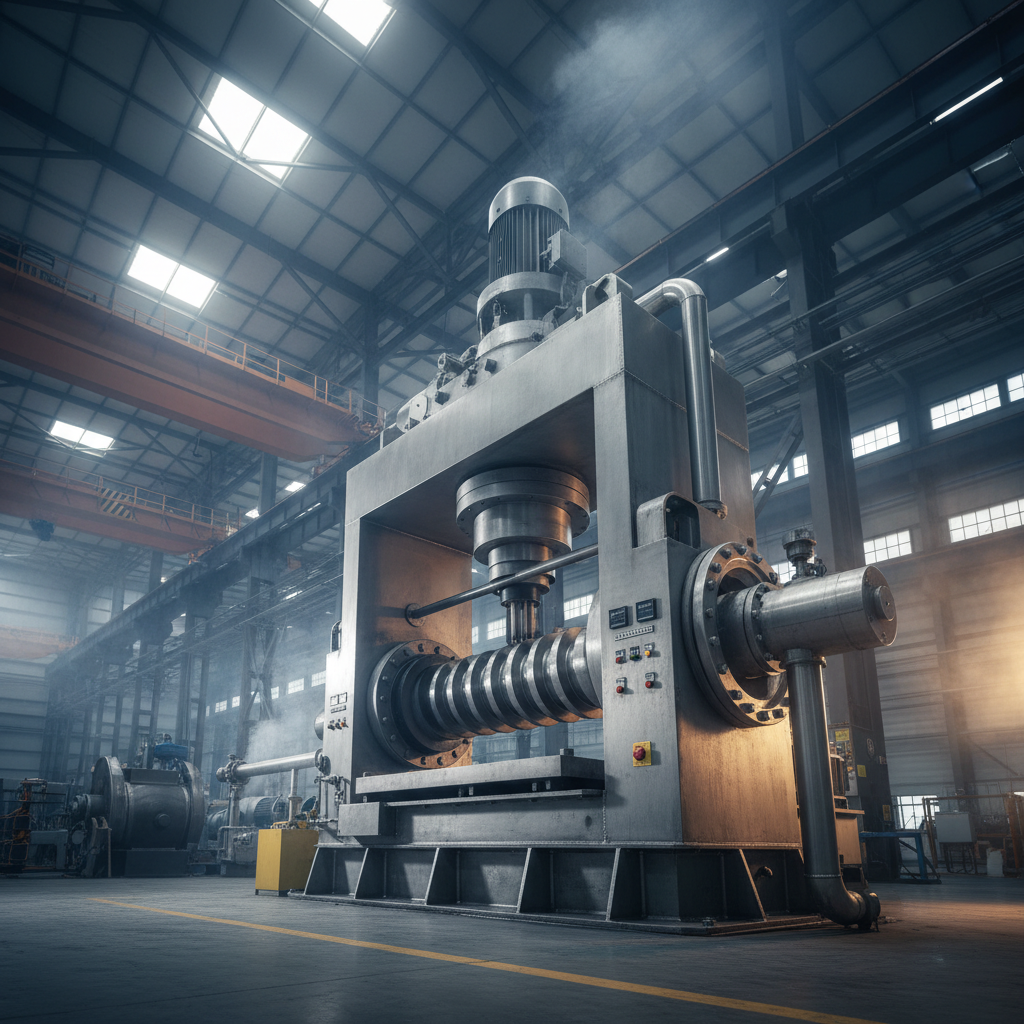
The core of high-efficiency flaking lies in the control of the gap between the two rollers. A deviation of even 0.1mm can lead to inconsistent flake thickness, which directly impacts the extraction rate. Modern systems employ hydraulic pump stations to maintain a stable gap, ensuring that the pressure applied to the seeds remains constant regardless of the throughput.
Furthermore, the introduction of anti-collision measures is critical. In older mechanical systems, roller collision could lead to catastrophic equipment failure or surface peeling. Advanced hydraulic rolling mills now use precision dials on the cylinders, allowing operators to adjust the pitch and required thickness with micron-level accuracy.
The integration of magnetic separation devices at the feeding stage further protects this precision. By removing ferrous contaminants before they reach the rolls, the system prevents pitting and scoring of the roll surfaces, extending the operational life of the alloy layers.
Traditional rolling mills often suffered from "outside dipping," where the material would leak from the sides of the rollers rather than passing through the center. This not only reduced efficiency but created significant waste and cleaning requirements.
The shift toward closer feeding roller alignment and the use of adjustable metal apex baffles has effectively eliminated edge leakage, ensuring that 100% of the raw material is subjected to the precise pressure of the rolling gap.
Additionally, the transition from standard cast iron to centrifugal casting rolls with specific alloy layers (typically 30-35mm thickness) has addressed the issue of roll deformation. With hardness levels reaching HS75o±2, these rolls maintain their geometry under extreme pressure, ensuring a uniform flake across the entire width of the machine.
Scaling a vegetable oil production line requires a careful balance between throughput (tons per 24 hours) and power consumption. As capacity increases, the power requirement does not grow linearly but is influenced by the roller width and the hydraulic pressure needed to maintain the 0.25-0.35mm embryo thickness.
For instance, a mid-range system processing 120-150 tons per day requires significantly different power configurations (around 60-70kW combined) compared to high-capacity industrial units that can handle up to 500 tons per day.
In a typical industrial setting, the flaking machine serves as the bridge between oilseed pretreatment equipment and the oil press. For plants processing diverse seed types—such as soybean, rapeseed, or sunflower—the ability to quickly adjust the roll gap via hand-wheel and locking mechanisms is vital. This agility allows the operator to switch seed varieties without lengthy downtime.
Maintenance cycles are also a primary concern for buyers. The adoption of square-structured tile seats and tightly closed end caps for bearing seats helps in reducing fuel/lubricant waste and prevents contaminants from entering the bearing housing, which is essential for 24/7 continuous operation in a high-dust environment.
The evolution of roll materials has shifted from simple hard-facing to complex centrifugal casting. This process creates a dense, high-strength alloy layer that resists both abrasive wear and the intense compressive forces of the rolling process. The through-axis assembly method further ensures that the rolls do not deform under load, which is the primary cause of "uneven blanks" in lower-quality machines.
Moreover, the design of the scraper has evolved. Current elastic scrapers, compressed by external spring holders, allow operators to adjust the scraping degree from the outside of the machine. This ensures that the rolls remain clean of residue without requiring the machine to be dismantled, thereby maintaining a consistent friction coefficient.
From a systemic perspective, these improvements are integrated into broader vegetable oil processing plant solutions. By combining high-precision flaking with advanced centrifuges and filters, producers can achieve a purity and yield that was previously impossible with manual or semi-automatic systems.
Selecting the right flaking equipment requires evaluating the balance between daily capacity and the physical footprint of the machine. A model like the YYPYFP2 x 81 x 220D, which handles 450-500 tons per day, requires significant power (over 160kW) and a larger installation area, but offers the lowest per-ton energy cost.
Conversely, smaller plants may prioritize flexibility and lower initial investment, opting for models in the 30-80 ton range. However, the technical requirements for embryo thickness (0.25-0.35mm) remain identical regardless of scale, meaning precision cannot be sacrificed for size.
The following framework provides a relative assessment of different capacity tiers based on typical operational requirements and technical specifications.
| Capacity Tier (T/24H) | Power Demand | Roll Dimensions | Suitability |
|---|---|---|---|
| 30 - 60 | Low (11-37kW) | Small/Medium | Small-scale local mills |
| 70 - 100 | Medium (approx 45kW) | Medium | Medium enterprises |
| 120 - 200 | High (60-80kW) | Large | Industrial processing plants |
| 280 - 300 | Very High (110kW+) | Extra Large | Regional hub refineries |
| 450 - 500 | Ultra High (160kW+) | Industrial Grade | Large-scale global suppliers |
| All Models | Variable | 0.25-0.35mm gap | Standardized extraction |
The flaking machine is an automatic embryo rolling device used to flatten oilseeds into consistent flakes. This process ruptures the seed's cellular structure and increases the surface area, which maximizes the efficiency of the subsequent oil extraction process, whether through mechanical pressing or chemical leaching. Consistent thickness (typically 0.25-0.35mm) ensures an even flow of material through the expeller.
The system utilizes a gap-type hydraulic pump station and integrated anti-collision measures. By using precision dials on the cylinders, operators can set a minimum clearance that prevents the rolls from ever making direct contact. This protects the high-quality centrifugal casting alloy layers from peeling or pitting, significantly extending the service life of the rolls compared to old mechanical adjustment mills.
For a capacity of 180-200 tons per 24 hours, the YYPYFP2 x 80 x 125 model is the most appropriate. It provides the necessary throughput with a power requirement of approximately 37kW x 2 (plus auxiliary power). This model balances high output with the precision required to maintain a 0.25-0.35mm embryo thickness across the entire production run.
Centrifugal casting creates a denser, more uniform alloy layer (30-35mm thick) with a hardness of HS75o±2. This material is far more resistant to deformation and abrasion than standard cast iron. When combined with a through-axis assembly process, it ensures the roll surface remains perfectly cylindrical under pressure, resulting in consistently qualified blanks and higher oil yields.
The machines use brand-name bearings housed in square-structured tile seats with tightly closed end caps. This design minimizes lubricant leakage and prevents the ingress of seed dust. Because of this robust sealing and the use of high-grade bearings, the system requires almost no major overhauls during its standard operational life, requiring only routine lubrication and inspection.
Yes, the equipment is designed for versatility. By adjusting the hand wheel and locking wheel, operators can modify the gap between the rollers to suit different seed densities and sizes. The dial display provides real-time feedback on the adjustment, allowing the plant to switch between different seeds while maintaining the optimal embryo thickness for each specific variety.
The efficiency of a vegetable oil production line is often decided in the pretreatment phase. By investing in high-precision hydraulic flaking technology, processors can eliminate the inconsistencies that lead to oil waste and equipment wear. The transition toward centrifugal casting and automated gap control represents a fundamental shift toward data-driven, precision engineering in the oilseed industry.
Ultimately, the goal of any modern oil mill is to maximize the extraction ratio while minimizing energy input. Achieving this requires a holistic approach—integrating robust flaking, efficient pressing, and advanced filtration—to ensure that every ton of raw material yields the maximum possible amount of high-quality edible oil.